


Have You Eaten? Korean Food, Soup, and the Language of Care
Updated: Feb 11
A reflective look at Korean food culture, hospitality, and comfort foods like guk and jjigae—how soup becomes a quiet language of care, home, and nourishment.
Jacqueline Sohn, PhD
Across cultures, food is one of the most common ways people express care. Meals are prepared for guests, dishes are brought during grief, and feeding someone often means you belong here. Hospitality expresses love through presence and attention, creating conditions where people can rest, nourish and flourish.
What I’m reflecting on here isn’t that Korean culture is the only place where food is love—but that, in my own experience, the emphasis and insistence around food stood out.
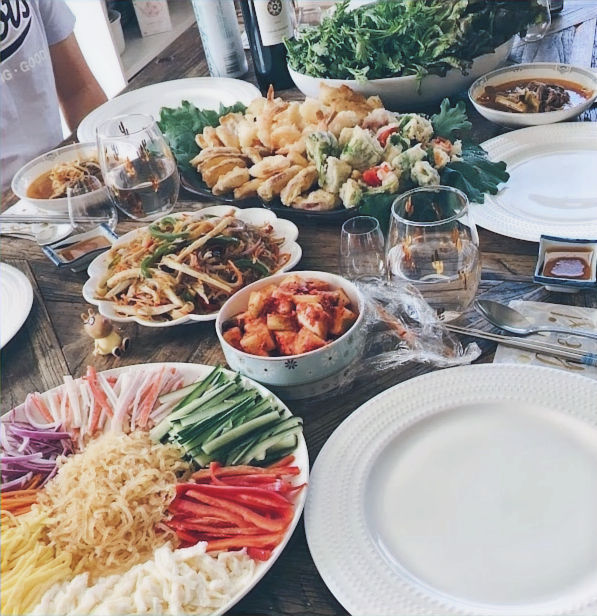
Growing up in my family and spending time in Korean friends’ homes, care was often communicated through food before words. A familiar greeting wasn’t How are you? but “밥 먹었어?” — “Have you eaten?” Even if the answer was yes, it was often followed by encouragement to eat a little more.
It was never intended or received as pressure and always about care, kindness and generosity.
When I spent time in many of my Western friends’ homes, hospitality certainly existed—but it often looked different. It was more verbal, more optional, and generally less insistent around food. Not always, and not universally—but enough that the contrast stayed with me.
In Korean households, food felt especially tied to comfort, particularly during vulnerable moments.
Soup, Stew, and the Language of Care
This emphasis shows up most clearly in guk (soups) and jjigae (stews), which sit at the heart of Korean meals.These dishes aren’t side items. They’re anchors. Warm, brothy, gently simmered, and meant to be shared. They’re easy to digest, forgiving in preparation, and often made in large pots so they can be eaten over time. When someone is sick, overwhelmed, grieving, postpartum, or simply worn down, the response is often the same: Make soup.
Soups and stews are not meant to be rushed when preparing. This allows flavours to deepen slowly. They don’t demand precision or energy. They meet people where they are—especially when capacity is low. They are warming, comforting, nourishing and strengthening.
A Bowl of Guk and the Ache of Home
I felt this most vividly when I left home for university.
I remember returning for a visit after being deeply homesick—more than I had expected to be. I sat at the table, chatting with my mom while she made seolleongtang – Korean oxbone soup, a childhood favourite. As I ate it with rice and kimchi, I remember barely being able to choke back my tears as they streamed quietly into the bowl. It was a rush of warmth, comfort and heartache all at once, triggered by the familiarity of the food, love and care I felt from my mom who prepared it.. with the longing I had been feeling for home.
No one asked me to explain how I was doing. No one tried to fix the sadness. I remember my mom quietly bringing me more side dishes and constantly re-filling my bowl with warm broth.. her actions speaking volumes. The soup didn’t resolve anything. But it comforted and steadied me.
That moment has stayed with me—not because it made the homesickness disappear, but because of the profound feeling of comfort intermingling with my heartache.
Why Doenjang Jjigae Supports the Body
Beyond comfort and memory, doenjang jjigae offers something quietly supportive at a physiological level as well.

Doenjang is a fermented soybean paste, and fermentation matters. The fermentation process breaks down complex components in food, reducing compounds that typically inhibit nutrient absorption. This makes nutrients more bioavailable and easier for the body to assimilate—not only from the doenjang itself, but from the other foods eaten alongside it.
In seasons of stress, illness, grief, or prolonged overwhelm, digestion often becomes less efficient. Appetite diminishes. Energy drops. The body shifts into conservation mode. Foods that are warm, brothy, and easier to digest reduce strain and support nourishment without demanding extra effort.
Doenjang jjigae supports the body in numerous ways. Among them:
Fermentation supports digestive health
Warmth supports nervous system regulation
Broth supports hydration and nutrient delivery
Simple ingredients reduce digestive burden
This is part of why this stew has endured across generations. It’s not only culturally meaningful—it’s wise for the body.
A Simple Guk for Homesick Days
Doenjang Jjigae
This is not a showpiece recipe.It’s the kind of stew you make when you need something steady. I also share a very basic, flexible version. There are many variations and you can add whatever protein you like.
Why This Stew Works on Hard Days
Warm and grounding
Gentle on digestion
Made in one pot
Flexible and forgiving
Tastes better the next day
Ingredients (Serves 2–3)
4 cups water or anchovy–kelp broth (water is enough on low-energy days)
2 tablespoons doenjang
1 small zucchini, sliced
1 small potato, diced (optional, but comforting)
½ onion, sliced
A handful of tofu cubes (medium-firm or firm)
1–2 cloves garlic, minced
Optional: meat, mushrooms, leftover vegetables, and/or a small spoon of gochujang; thinly chopped green onion and a drizzle of sesame oil to top it off
Method
Bring the water or broth to a gentle simmer.
Dissolve the doenjang directly into the pot. It doesn’t need to be perfectly smooth.
Add your protein if using, potato and onion. Simmer for 5–7 minutes.
Add zucchini, tofu, and garlic.
Simmer another 5–10 minutes, until everything is soft and the flavours have settled. Add in gochujang if using.
Taste gently and adjust if needed—but simple is the point.
If using, top with green onion and small drizzle of sesame oil
Eat with rice, or on its own. Better yet- with kimchi.
Sojourn Foundations: Nourishment That Works With the Body
At Sojourn, nourishment is understood as foundational.
We think about food the same way we think about healing and flourishing: growth unfolds over time, supported by environments and practices that reduce strain rather than add pressure.
Doenjang jjigae reflects several Sojourn foundations:
Safety & Regulation
Warm, familiar foods support nervous system settling.
Accessibility & Gentleness
Fermented foods support digestion and nutrient absorption when capacity is low.
Steady & Sustainable Care
Nourishment isn’t about fixing—it’s about sustaining.
Integration of Body, Mind, Context and Meaning
Food carries memory, belonging, and physiological support together.
A bowl of soup doesn’t rush healing, readiness or explanation.
It simply offers what’s needed in the moment: Eat. Rest.


Comments